Morton’s Neuroma Treatment- Deciding to Remove or Repair the Nerve with Cryosurgery

At Gotham Footcare, we take pride in offering top-tier care for foot and ankle conditions, with a special focus on treating and curing Morton’s neuroma. Our team of highly sought-after foot surgeons has performed thousands of Morton’s neuroma procedures, helping countless patients find relief from this painful condition. Over the years, our expertise and dedication have not gone unnoticed; the foot surgeons at Gotham Footcare have been recognized as one of New York’s top 3 best doctors for seven consecutive years. When it comes to your foot health, you can trust that you’re in the hands of some of the best specialists in the field.
Morton’s Neuroma Treatment: Deciding to Remove or Repair the Nerve with Cryosurgery
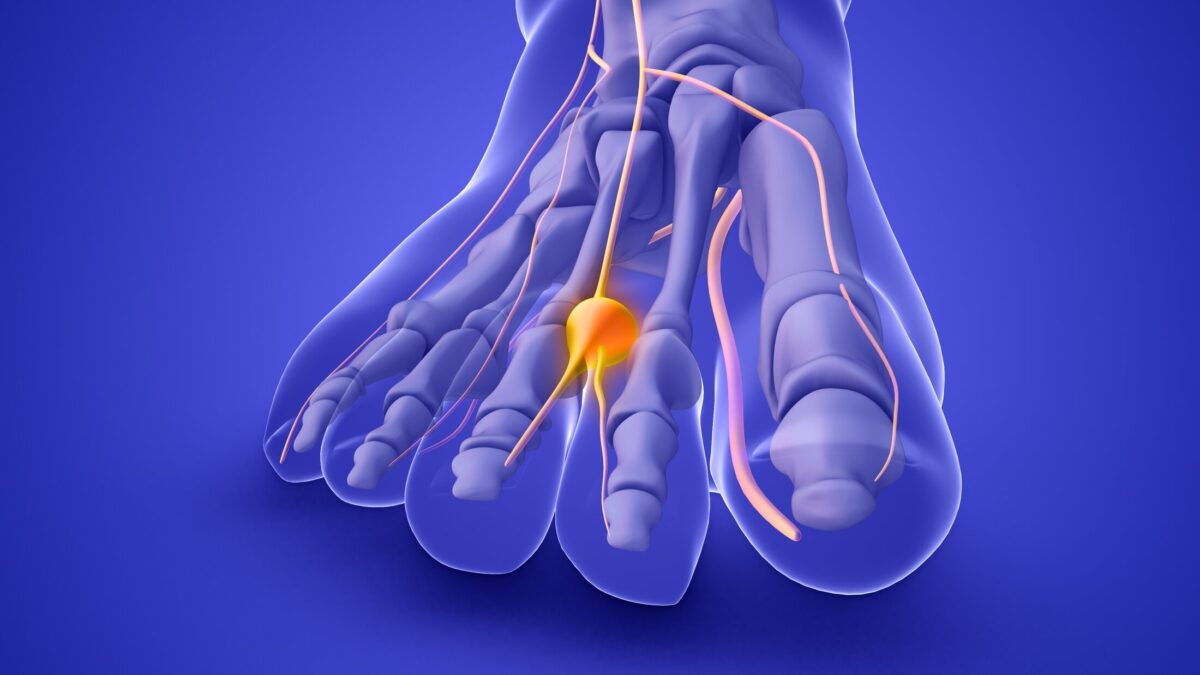
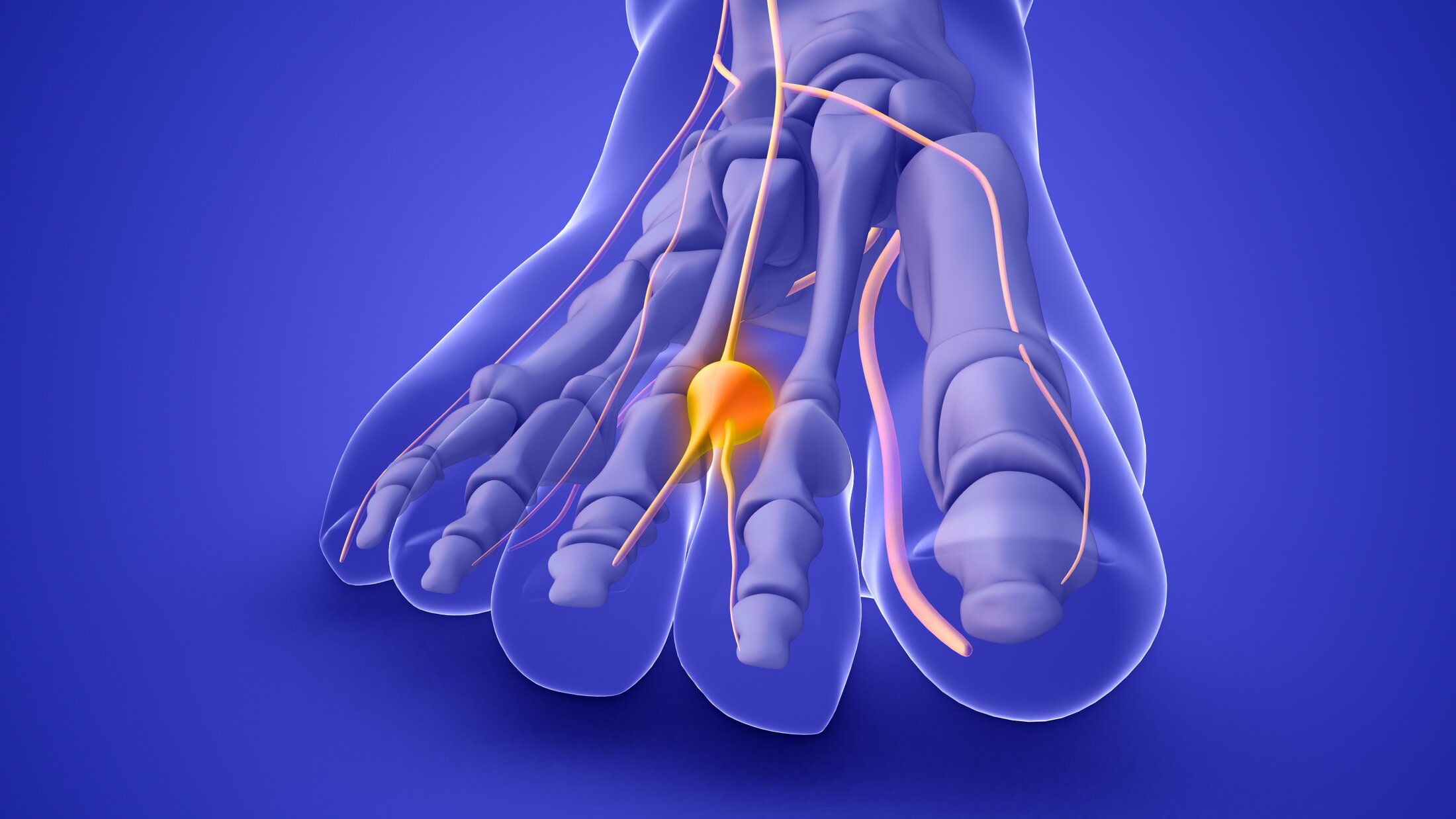
When you have Morton’s neuroma, your foot’s ball hurts. Usually, it hurts between your third and fourth toes. It happens when the muscle around one of the nerves that goes to the toes gets thicker. This can make the ball of the foot hurt very badly. The swelling occurs due to irritation, excessive pressure, or injury to the nerve
To quickly diagnose and effectively treat Morton’s neuroma, it is important to understand what it is and how to spot its signs. People with these symptoms should see a doctor to confirm the diagnosis and explore the best treatment options.
Conservative Treatments for Morton’s Neuroma
Modifications to orthotics and footwear
- Custom orthotics: Custom orthotics are shoe inserts made specifically for you that support the injured area and relieve pressure.
- Padding: Padding means putting pads in your shoes to protect your nerves and soften your football.
- Footwear Modifications: Choose shoes with a larger toe box to prevent squishing of your toes, and opt for low heels to alleviate pressure on your forefoot.
Activity modification
- Avoiding High-Impact Activities: Reduce or modify activities such as running and jumping that exert excessive pressure on the foot’s ball.
- Alternating Activities: Change up your workouts by adding low-impact activities like swimming or riding to your schedule.
Strength training and physical therapy
- Stretching Exercises: Specifically, designed stretches to make the muscles in your feet and calves more flexible.
- Strengthening Exercises: These are exercises that make the muscles in your foot and lower leg stronger. This can help your foot move better and take pressure off of the neuroma.
- Physical therapy: techniques performed by a physical therapist to move the joints and soft parts of the foot.
Medications and Injections
- Anti-inflammatory drugs, or NSAIDs: You can purchase these pain relievers and inflammation fighters over-the-counter or with a prescription.
- Corticosteroid Injections: Injections of corticosteroids temporarily reduce swelling and pain in the body.
- Alcohol Sclerosing Injections: These injections of a sclerosing drug, such as alcohol, help shrink the neuroma and ease the pain.
Lifestyle modifications
- Weight Management: Weight management means staying at a healthy weight so that your feet don’t have to work as hard.
- Regular Footcare: Care for your feet on a regular basis, like getting massages and using ice packs to ease pain and swelling.
Alternative therapies
- Acupuncture: Acupuncture treatments can help some people feel better.
- Chiropractic Care: Chiropractic care includes adjustments and techniques that a chiropractor uses to help you align your feet and calm your nerves.
Use of Assistive Devices
- Metatarsal Pads: To relieve pressure on the neuroma, place metatarsal pads under the ball of the foot.
- Toe Spacers: These tools maintain the distance between your toes and relieve pressure on injured nerves.
The goal of conservative treatments is to alleviate symptoms and improve the way your foot functions without surgery. These treatments are often the first ones tried, and they work very well for many people with Morton’s neuroma.
Surgical Interventions for Morton’s Neuroma
When less invasive methods of treating Morton’s neuroma don’t work, surgery may be an option. The main types of surgery are:
- Neurectomy (nerve removal)
The procedure involves cutting out the nerve that is hurting.
Technique:
- You cut the foot’s dorsal or plantar surfaces.
- The surgeon finds the thicker nerve tissue and cuts it out.
- We use sutures to close the cut.
Benefits:
- It removes the source of the irritation, ending the pain for good.
Drawbacks:
- Unfortunately, there is a chance of developing a stump neuroma, which is a painful growth on the end of the cut nerve, which can be more painful than the original symptoms.
- There is a chance that the place where the nerve was removed will become numb.
Recovery:
- Medication helped with pain and stiffness after surgery.
- Over the next few weeks, slowly return to weight-bearing tasks.
- It could take a few months to get fully better.
- Decompression Surgery
The procedure involves taking pressure off the nerve without cutting it off.
Technique:
- The injured area receives a cut.
- In order to free up the nerve, the surgeon cuts the ligament between the adjacent metatarsals or tissues around it.
- Sutures are used to close the cut.
Benefits:
- It keeps the nerve alive, reducing the risk of going numb.
- It is less invasive than a neurectomy.
Drawbacks:
- It might not work as well for chronic large sized neuromas.
Recovery:
- The recovery process is similar to a neurectomy, with a gradual return to normal activities.
- To track the healing and efficacy of the decompression, follow-up care is required.
- Minimally Invasive Procedures
Endoscopic Surgery:
- The procedure utilizes small incisions and a camera to guide the procedure.
This procedure often results in a quicker recovery and less postoperative pain compared to traditional open surgery.
Cryosurgery:
- Though primarily a conservative treatment, cryosurgery can also be considered a minimally invasive procedure.
- To reduce pain and inflammation, it involves freezing the affected nerve
Benefits of Cryosurgery
Minimally Invasive: The process only requires a small cut and doesn’t damage much tissue.
Reduced Recovery Time: Patients often get better faster than with standard surgery.
Less Pain and Scarring: The localized freezing results in less pain and scarring after the treatment.
Repeatable: There is little risk involved in repeating the process.
Post-Procedure Care
Rest and Ice: Patients should elevate their feet and rest to reduce swelling.
Pain Management: We may recommend over-the-counter painkillers to help with pain.
Follow-up: Regular follow-up meetings are held to check on the healing process and see how well the treatment worked.
Deciding Between Nerve Removal and Repair with Cryosurgery
When faced with persistent nerve pain, particularly in the foot, it’s essential to carefully consider your treatment options. The decision often comes down to two primary approaches: nerve removal, also known as neurectomy, or nerve repair with cryosurgery. Each method has its own advantages, but at Gotham Footcare, we consistently recommend cryosurgery over neurectomy, and here’s why.
Cryosurgery offers a minimally invasive solution that targets the problematic nerve, effectively reducing pain without the need for complete nerve removal. One of the main reasons we favor cryosurgery at Gotham Footcare is its higher success rate combined with a lower risk profile compared to neurectomy. By preserving the nerve rather than removing it, cryosurgery minimizes potential complications such as permanent numbness or the chance of painful nerve regrowth.
Given its benefits, we at Gotham Footcare prefer to attempt cryosurgery at least twice before considering a more invasive neurectomy procedure. This approach allows us to maximize the likelihood of pain relief while keeping risks to a minimum. Our goal is always to provide the most effective treatment with the least disruption to your life.
When deciding between nerve removal and cryosurgery, it’s crucial to discuss all your options with a specialist. At Gotham Footcare, we’re committed to offering personalized care tailored to your specific needs, ensuring that you receive the best possible outcome.
- What is the difference between a neurectomy and cryosurgery?
A neurectomy is a surgical procedure where the problematic nerve is completely removed to alleviate pain. This can be effective but carries risks such as permanent numbness or the potential for nerve regrowth leading to the formation of a stump neuroma, which can sometimes lead to even greater pain. Cryosurgery, on the other hand, is a less invasive procedure that uses extreme cold to freeze and disable the nerve, preventing it from sending pain signals without removing it entirely. At Gotham Footcare, we typically recommend cryosurgery over neurectomy because it has a higher success rate and carries fewer risks. We often try cryosurgery at least twice before considering neurectomy, providing a safer and more effective approach to nerve pain management. - Is cryosurgery effective for treating Morton’s neuroma pain?
Yes, cryosurgery is an effective treatment for nerve pain, particularly when traditional treatments have not provided sufficient relief. This procedure works by applying extreme cold to the affected nerve, which disrupts its ability to transmit pain signals. At Gotham Footcare, we have found cryosurgery to be highly successful in reducing or eliminating nerve pain with minimal risk. We prefer to try this method first because it’s less invasive than nerve removal and has a faster recovery time, allowing patients to return to their normal activities more quickly. - When should a neurectomy be considered for nerve pain?
A neurectomy should be considered only after other less invasive treatments, such as cryosurgery, have been attempted and proven ineffective. Because a neurectomy involves permanently removing the nerve, it can result in permanent numbness and carries the risk of painful nerve regrowth. At Gotham Footcare, we prioritize patient safety and comfort, which is why we recommend trying cryosurgery at least twice before considering a neurectomy. This approach ensures that all other options have been explored before opting for a more invasive procedure.